Janmabhoomi Group of Newspapers

A Legacy of Journalism, Public Service & Regional Connect
Janmabhoomi Group of News Papers – A Legacy of Journalism, Public Service & Regional Connect
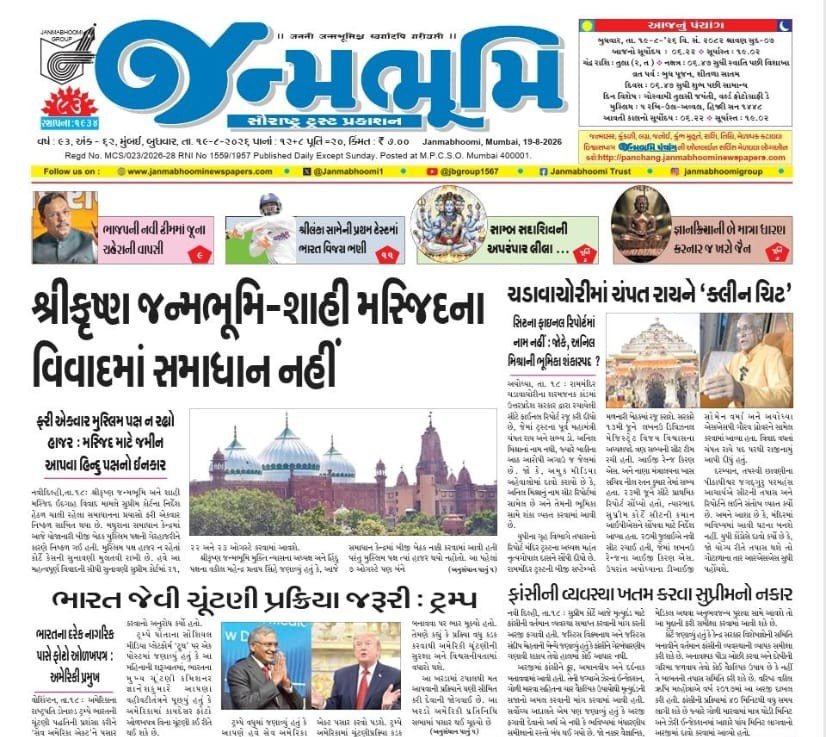
For over 93 years, the Janmabhoomi Group, under the stewardship of Saurashtra Trust, has been a respected institution in Gujarati journalism, public communication and business publishing. With a strong legacy of editorial credibility, regional understanding and public service, the Group has built an enduring relationship of trust with millions of readers across generations. The Saurashtra Trust was established in 1931 by the distinguished patriot and freedom fighter Shri Amrutlal Sheth. On 9 June 1934, the Trust began publishing the Gujarati daily Janmabhoomi from Mumbai. The Trust was founded with the objective of publishing newspapers and periodicals while supporting social institutions in their work and efforts.
A Legacy Built on Trust Over the decades, the Janmabhoomi Group has evolved into a respected media and publishing institution with a presence across print, digital and business publishing. Its publications have played an important role in informing communities, reflecting regional aspirations, highlighting development issues and creating informed public discourse. 93+ Years of Legacy | 5+ Publications | 5M+ Regional Readers Print & Digital Presence | Strong Regional Connect The Group's longstanding credibility, regional influence and connection with readers have made it a distinctive institution in Gujarati-language journalism and commercial publishing. Our Publications The Janmabhoomi Group has developed a diverse portfolio of publications serving readers across different regions, interests and communities.
Kutchmitra Serving the people of Kutch for decades, Kutchmitra has developed a distinctive identity as a strong regional voice and an important source of news and information for the Kutchi community. Its coverage reflects the region's social, economic and developmental journey, while its long-standing association with the people of Kutch has been particularly evident during natural disasters and periods of public need. Website: https://www.kutchmitradaily.com


Phulchhab With a rich history rooted in Saurashtra, Phulchhab is one of Gujarat's historic Gujarati publications. Its legacy is associated with fearless journalism, public-oriented reporting and close engagement with the social, cultural and developmental life of Saurashtra. The publication has historically covered regional issues, agriculture, development, commerce, industry, social affairs and public concerns. Website: https://www.phulchhab.com
Vyapar Gujarati Vyapar is a dedicated commercial publication to address the growing information needs of Gujarati readers engaged in trade, commerce and industry. Over the years, it has developed a strong identity around business news, markets, economic developments, commercial trends, regulations and issues affecting the business community. Website: https://vyapar.janmabhoominewspapers.com

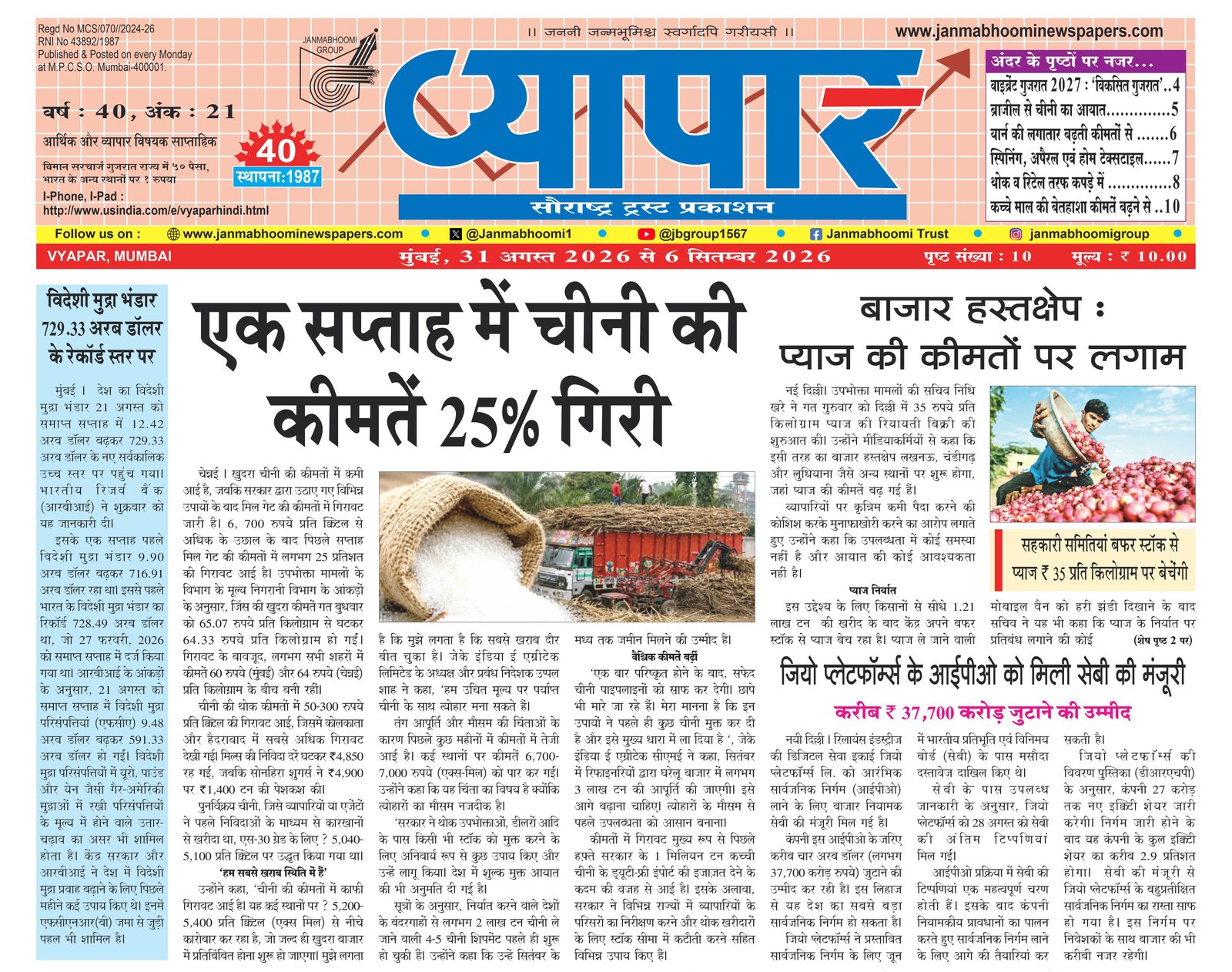
Vyapar Hindi The Hindi edition of Vyapar extends the Group's business and commercial publishing ecosystem to Hindi-speaking audiences, providing business-oriented information, market developments and commercial news. Website: https://vyaparhindi.com
Janmabhoomi Pravasi Janmabhoomi Pravasi has a distinctive place within the Group's publishing portfolio, combining news and analysis with features covering society, culture, health, science, literature, entertainment and other subjects of general interest. Its broader editorial format has enabled it to connect with Gujarati-speaking audiences beyond conventional daily news readership. Website: https://pravasi.janmabhoominewspapers.com
.jpg)
Other Publications The Group's wider publishing heritage also includes Kavita and the Janmabhoomi Panchang, reflecting its long standing engagement with Gujarati language, literature, culture and traditional knowledge. Journalism with a Strong Sense of Social Responsibility For the Janmabhoomi Group, journalism has historically been closely connected with public service and social responsibility. The Group's publications have repeatedly stood with communities during natural calamities, social challenges and moments of national importance. Their institutional philosophy has emphasized not only reporting events, but also contributing to public awareness, social welfare and constructive community action. Janmabhoomi – Service as a Responsibility Throughout its history, Janmabhoomi has combined journalism with a strong sense of public service. During the 1999 Kargil conflict, the Group participated in a patriotic fund-raising effort that collected approximately ₹8.10 crore, reflecting the strong public response generated through its social appeal. The publication's historical record also reflects its involvement in education, social reform, relief efforts and initiatives supporting those in need. Kutchmitra has maintained a particularly close relationship with the people of Kutch. During major calamities, including the 1998 cyclone and the devastating 2001 earthquake, it remained closely connected with affected communities. Following the 2001 earthquake, Kutchmitra not only upheld its commitment to responsible and constructive journalism, but also contributed to the rehabilitation of five remote villages in Kutch. This reflects a tradition of going beyond journalism to actively contribute to community recovery and rebuilding. Phulchhab also has a long history of public-oriented journalism and social engagement. Its historical journey includes involvement during natural calamities, social challenges and public movements, reinforcing its identity as a publication closely connected with the people of Saurashtra. A Tradition of Public-Interest Journalism The history of the Janmabhoomi Group is closely associated with India's freedom movement and the development of Gujarati journalism. The Group's publications have historically covered national affairs, politics, economics, education, social reform, culture, community issues and development. Janmabhoomi, in particular, played an active role in reporting the national movement and subsequently continued to focus on the responsibilities and challenges of independent India. Credible Journalism | Public Interest | Responsible Communication | Regional Connect | Social Responsibility | Business & Commercial Awareness From Print Legacy to a Wider Media Ecosystem While its roots are firmly established in print journalism, the Janmabhoomi Group's communication ecosystem has evolved with changing technology and audience behaviour. Its publications now extend their presence through digital platforms and online news portals, enabling readers to access news and business information across devices and geographies. This combination of legacy media credibility and digital accessibility enables the Group to remain connected with both traditional and emerging audiences.